Core Concept
Lighting inside the average home has changed dramatically over the past two decades. What once served purely functional purposes—overhead fixtures, table lamps, the occasional accent light—has become one of the primary tools homeowners use to define mood and personality within a room. Warm string lights, statement chandeliers, and layered dimmable systems now anchor design boards on Pinterest and inspire renovation projects across the country. This shift reflects a broader cultural change: people no longer think of lighting as an afterthought, but as a central design element that shapes how a space feels. Retailers have responded by expanding entire departments to smart bulbs, dimmer switches, and decorative fixtures that would have seemed excessive in a typical living room a generation ago.
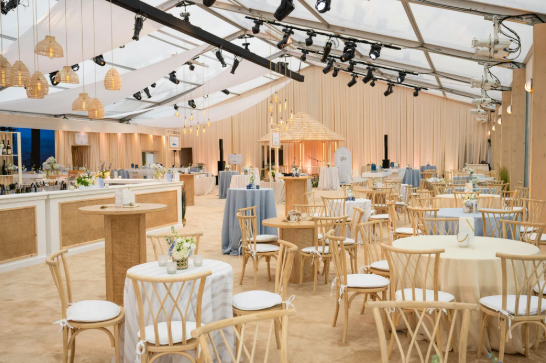
That same philosophy has spilled over into how people plan gatherings outside the home. Birthday parties, backyard receptions, and milestone celebrations increasingly borrow from residential design language, favoring soft glows, layered textures, and warm color temperatures over harsh overhead lighting. Homeowners who have spent years curating their living rooms and patios naturally want that same sensibility carried into the events they host. The result is a growing overlap between interior design trends and event planning, where the two disciplines borrow freely from each other. Wedding planners in particular have noticed how often clients arrive with a folder of home renovation photos rather than traditional bridal inspiration boards. It is no longer unusual for a couple to request the same warm-toned bulbs they installed in their kitchen renovation for their reception tent instead.
The Practical Reality
Translating home lighting instincts into an event space is rarely as simple as it looks on social media. A living room might only require a few well-placed fixtures, but a barn venue, backyard tent, or reception hall involves square footage, ceiling height, and power access that most homeowners have never had to consider. Extension cords, load calculations, and weatherproofing become real concerns the moment lighting design moves outdoors or into a rented venue. What reads as effortless ambiance in a finished photo often required careful planning long before guests arrived. Even simple decisions, like whether string lights can be safely anchored to an existing structure or need a separate frame, often require input from someone with hands-on experience. A tent lacks the electrical outlets most homes take for granted, and a barn’s rafters are not always rated for hanging heavy fixtures without extra support.
See also: About Datrihelminen Life
This is where many hosts start looking beyond their own supply closet and toward rental companies that understand both the aesthetic and the logistics involved. Working with a service that specializes in event lighting rental Utah gives hosts access to equipment built for outdoor use, staff who know how to hang string lights safely across a barn ceiling, and options for adjusting color temperature to match a specific decor theme. It also removes the guesswork around how many fixtures a given space actually needs, which is a common miscalculation for first-time event hosts. Renting rather than buying also means the equipment reflects current trends instead of whatever was available five years ago. That kind of support tends to matter most during peak wedding season, when good equipment and experienced crews are booked out weeks in advance.
Even with the right equipment lined up, coordinating the overall look still takes planning, and this is often where general wedding and event guides prove useful. Resources such as The Knot wedding planning resources offer checklists and vendor comparison tools that help hosts figure out what questions to ask before booking lighting, florals, or rentals of any kind. Pairing that kind of planning resource with a local rental partner tends to produce the most consistent results, since the guide covers the big-picture timeline while the rental company handles the technical execution. Hosts who use both tools together generally report fewer surprises on the day of the event, and their photos tend to hold up just as well as the home decor inspiration that started the whole process. None of this replaces a walk-through of the actual venue, but it does help hosts arrive at that walk-through with realistic expectations.