Here’s an uncomfortable question worth asking yourself: Is your home’s design actually protecting you, or just looking like it is? Most homeowners bolt on a camera system or swap out door locks months after moving in, treating security as a fix-it-later problem. That instinct is backwards.
Smart home security design and home protection design ideas deserve a seat at the table from day one, not as an afterthought, but as a core design pillar. A 2024 report found that 79% of consumers say their smart home devices positively impacted their lives. That number doesn’t happen by accident. It reflects intentional, design-forward thinking done right.
Real home protection isn’t simply about stacking devices into your space. It’s about designing safety into every corner, structural, digital, and aesthetic, before a single nail is driven. Let’s break down exactly how that works.
Designing Protection Into Your Renovation
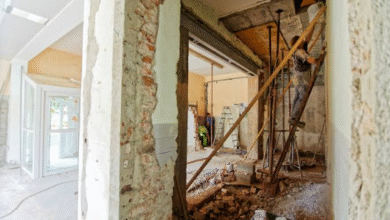
A remodel is more than new floors and fresh paint. Walls are open. Systems are exposed and accessible. Decisions made during that window will define your home’s safety profile for decades. Protecting your home with design during a renovation means thinking beyond surface finishes and interrogating the structural, technological, and material backbone of every project decision.
The numbers reflect this shift. The smart home security market is projected to grow from $63.3 billion in 2024 to roughly $68.8 billion in 2025 (techkv.com), a signal that homeowners are increasingly treating security as a design investment rather than a discretionary line item.
What Smart Exterior Material Choices Actually Do
When renovating, prioritizing siding installation with high-performance materials, particularly fiber cement options, delivers meaningful, measurable resilience. Impact resistance, thermal regulation, and structural integrity aren’t abstract benefits; they translate directly into a home that holds up better against forced entry and severe weather alike.
In climates like Middle Tennessee’s, where conditions can be genuinely punishing, that matters. Done during a renovation, it integrates seamlessly with insulation and structural reinforcement rather than fighting against them afterward.
Universal Design Paired With Smart Technology
Universal Design principles, step-free entries, accessible hardware, and flexible door controls often get filed under “accessibility features.” But paired with smart home integration, they accomplish something broader: future-proofing a home for changing circumstances while improving safety for everyone inside.
Wider doorways support emergency egress. Automated door systems reduce the vulnerabilities that human error routinely introduces. It’s a quiet, thoughtful design that earns its value precisely when you need it most.
Smart Home Safety Features That Start in the Structure
You can’t bolt your way to a secure home. The most resilient smart homes are ones where smart home safety features aren’t layered on top of a design; they’re woven into it. Wiring, access architecture, network infrastructure, and physical materials all need to function as a single, coordinated system rather than independent parts doing their own thing.
Teams working in Middle Tennessee understand this well. They’re vocal about addressing siding installation during the building phase, not as an afterthought. Getting that exterior layer right from the start establishes the first real line of physical defense against both intrusion and the elements. Waiting until later? That’s a more expensive, less effective version of the same outcome.
Network Infrastructure and Segmentation
A smart home is only as safe as the network powering it. Full stop. Routing your IoT devices onto a dedicated, segmented network, away from laptops and phones, closes one of the most common vulnerabilities exploited in residential breaches. Pair that with WPA3 encryption, firmware updates on a real schedule, and a centralized tech hub, and you’ve built something meaningfully harder to crack. It’s not glamorous work. But think of your home network as its nervous system; if it goes down or gets compromised, everything suffers.
Privacy-by-Design: Data Stays Home
Here’s one that doesn’t get enough credit. Local edge computing keeps your household data processing inside your home rather than routing it through external cloud servers you don’t control. That distinction matters enormously.
Physical override switches, transparent data dashboards, and local-first architecture give you actual ownership of what gets collected and what doesn’t. Privacy-by-design isn’t a buzzword for tech enthusiasts; it’s a structural philosophy that should shape every system you choose to install.
With solid infrastructure and privacy fundamentals locked in, the next challenge is making those protections work on the surface, where design meets daily life, and security needs to look as good as it performs.
Home Security Design Tips That Don’t Sacrifice Aesthetics
Effective security doesn’t need to look militant. Some of the most powerful deterrents are completely invisible to a casual visitor. These home security design tips exist at the intersection of function and form, and when executed well, they actually elevate a home’s visual identity rather than undermining it.
Lighting That Mimics Real Life
This one is underestimated constantly. Staggered lighting scenes that shift across rooms at realistic, human intervals make a home read as occupied, even when no one is there.
Motion-triggered exterior fixtures serve double duty: welcoming guests arriving at night while announcing anyone who has no business being there. The real power comes from integrating these scenes into your home automation so they run on their own, without manual babysitting.
Concealed Cameras and Rolling-Code Access
Overt camera mounts have their place, but cameras tucked discreetly into architectural features, such as soffits, decorative trim, entryway elements, are far harder to identify and circumvent. Rolling-code entry systems take it a step further, cycling access credentials automatically so they can’t be cloned or replayed. The best security feature is one that an intruder never sees coming.
Hardscaping as a Silent Deterrent
Elevated stone planters, natural retaining walls, and strategically positioned shrubbery aren’t decorative choices; they’re quiet physical deterrents doing real work every day. Well-placed hardscape elements channel foot traffic, restrict access to vulnerable entry points, and add genuine curb appeal simultaneously. Security is working for you without announcing itself.
These principles are powerful in any context, but if a renovation is on your horizon, you’re sitting on a rare opportunity to embed these protections far deeper into your home’s bones than most people ever manage.
Whether you’re deep in a renovation or simply shoring up an existing home, this next section condenses everything above into concrete, prioritized actions you can begin working through right now.
See also: The Timeless Language of Flowers in Home Décor
Home Protection Design Ideas You Can Act On Today
These home protection design ideas aren’t thought experiments. They’re grounded, practical steps, ordered by complexity so you can start where your situation demands it.
| Design Action | Security Benefit | Difficulty Level |
| Segment IoT devices on a separate network | Reduces exposure from compromised devices | Low |
| Upgrade to WPA3 router | Stronger encryption for all connected systems | Low |
| Install motion-triggered lighting | Deters intruders, improves nighttime safety | Medium |
| Add hardscape barriers around entry points | Physical deterrent with aesthetic value | Medium |
| Choose impact-resistant siding during remodel | Weather and intrusion resistance | High |
| Integrate Universal Design features | Improves usability and long-term safety | High |
Each action reinforces the others. That’s intentional, because the homes that hold up best aren’t built around isolated features but around systems where design and protection are genuinely inseparable.
Design Is the Security Strategy
The most protected homes don’t look like fortresses. They look like places where someone cared deeply about every decision, materials, network architecture, landscaping, lighting, and technology chosen, not in isolation but as a unified whole. Smart home safety features deliver their full value only when they’re treated as a design commitment from the very beginning, revisited and strengthened with every renovation rather than left to age in place.
Security isn’t a product you buy once and forget. It’s an ongoing investment in the people who call that space home, and it deserves to be designed accordingly.
Frequently Asked Questions
What design features boost security without adding obvious gadgets?
Hardscape barriers, layered lighting automation, and cameras embedded within architectural elements offer strong deterrence without disrupting your home’s visual character. The best security work stays invisible.
How does siding installation affect home safety?
Choosing siding installation with impact-resistant fiber cement materials introduces a serious physical barrier against both forced entry and extreme weather. When executed during a renovation, it integrates with insulation and structural reinforcement for compounding protection across every front.
Why does network segmentation matter so much?
If a smart thermostat gets breached, it shouldn’t hand an attacker access to your security cameras or personal data. Segmentation keeps damage contained. It’s a simple concept with outsized consequences when ignored.