The Options
If a child’s bedroom offers no dedicated space for calm activity, restlessness fills the gap, and parents often find themselves negotiating over tablets and screens by mid-afternoon. Without a designated quiet corner, evenings become harder to unwind, and clutter tends to spread as toys and books compete for the same surfaces. The good news is that a room doesn’t need extensive renovation to solve this problem. A handful of realistic categories cover most household needs, from cozy reading nooks to compact craft stations. Even a small bookshelf or a repurposed dresser drawer can serve as the anchor point for whichever option a family chooses.
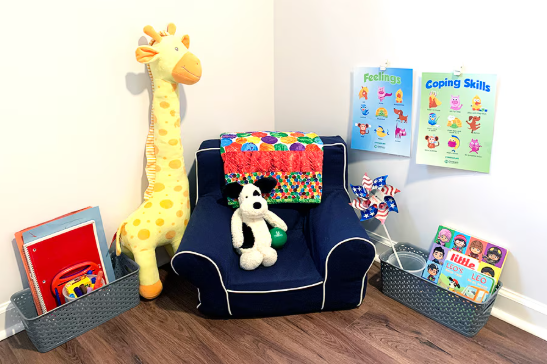
A reading nook typically pairs a soft chair or floor cushion with a small shelf, requiring little more than a corner and decent lighting. A craft table works for kids who like building or drawing but demands more supervision and cleanup, since markers and glue tend to wander. A dedicated coloring station sits somewhere between these two, offering a flat surface, a caddy for supplies, and a rotating stack of printable sheets that keep the activity fresh without much cost. Sensory bins, filled with rice, beads, or fabric scraps, suit younger children but need containment to avoid a mess spreading across the floor.
How to Evaluate
Choosing among these setups starts with an honest look at how a child actually spends downtime, not how parents wish they would. A family that already owns a stack of printable coloring sheets for kids has a built-in advantage, since a coloring station can be assembled with materials already on hand rather than a fresh shopping trip. Cost matters here too: a reading nook or coloring corner can be created for a fraction of what a full craft table setup with organized bins and supplies tends to run. Supervision requirements should factor into the decision as well, since younger children left alone with glue or small beads face different risks than those working with paper and crayons.
Safety and screen-time reduction are worth weighing against each other, particularly given how much daily attention is spent on devices. Recent guidance available through CDC health and wellness resources highlights how unstructured, screen-free play supports attention span and emotional regulation in young children. A parent trying to reduce tablet dependence might lean toward a coloring station or reading nook simply because both activities can be picked up and set down without a power switch. Durability also deserves consideration, since fabric bins and paper stacks wear out at different rates than wooden shelving or plastic caddies.
See also: About Datrihelminen Life
Making the Decision
Once the practical factors are on the table, the decision usually comes down to available space and how much daily upkeep a household can tolerate. Small bedrooms tend to favor a coloring station or reading nook because both can be tucked into a corner without eating into floor space needed for play. Larger rooms have more flexibility, and a craft table can coexist with a reading corner if storage is planned carefully from the start. Families with multiple children often find that a shared coloring station reduces squabbling over supplies more effectively than separate individual setups.
There’s no universal answer that works for every household, since children’s interests shift and rooms change purpose over time. A setup that felt right at age four might feel cramped or babyish by age eight, so building in some flexibility from the outset saves a redo later. Testing a simple version of any option for a few weeks before committing to furniture or storage systems tends to reveal whether a child will actually use the space. Small adjustments, made gradually, usually produce better results than a single large overhaul. Revisiting the setup every few months, even briefly, keeps it aligned with a child’s changing habits and interests.