Your home does not have to look damaged or neglected for wildlife to find a way inside. Sometimes a small gap, a broken vent, or an overgrown area around the property is enough to create an opportunity for animals to enter.
For homeowners, regular maintenance is not only about keeping a house attractive. It can also help prevent unwanted animals from finding shelter in attics, crawl spaces, garages, and other parts of the property. When an animal has already entered the structure, professional wildlife removal may be necessary, but preventing access in the first place is often much easier.
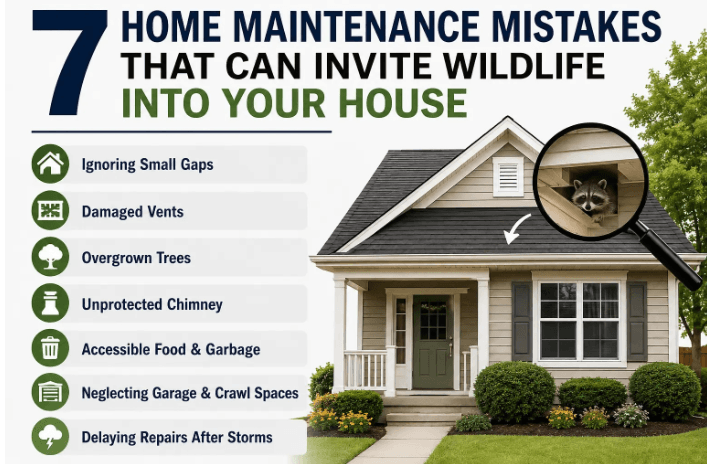
Here are seven common home maintenance mistakes that can make a property more attractive to wildlife.
1. Ignoring Small Gaps Around the Roof
The roofline is one of the most important areas to inspect when protecting a home from wildlife.
Loose fascia, damaged soffits, missing shingles, and gaps around flashing can create access points for animals. What looks like a minor repair issue from the ground may become an entry route into an attic or roof cavity.
Homeowners should inspect the roofline periodically, especially after strong winds or storms. Pay attention to areas where roofing materials meet walls, chimneys, vents, and other structures.
Fixing small problems early can prevent them from becoming much more expensive repairs later.
2. Leaving Damaged Vents Unrepaired
Vents are necessary for proper airflow, particularly in attics and other areas of a home. However, damaged screens or loose covers can create openings that wildlife can use.
Check attic vents, soffit vents, bathroom exhaust outlets, and other exterior openings for signs of damage.
A proper repair should maintain the ventilation function while preventing animals from entering. Avoid blocking vents completely, because poor ventilation can contribute to moisture buildup and other home problems.
3. Allowing Trees to Touch the Roof
Trees add shade and beauty to a property, but branches that grow directly over a roof can create maintenance challenges.
Wildlife can use nearby branches to reach elevated parts of a house more easily. Overhanging vegetation can also make it harder for homeowners to notice damage around the roofline.
Regular trimming can create useful clearance between trees and the structure. It also makes gutters, shingles, siding, and other exterior components easier to inspect.
You do not necessarily need to remove trees close to your house. Keeping them properly maintained is often a much better approach.
4. Forgetting About the Chimney
Chimneys are another part of the house that homeowners sometimes overlook during routine maintenance.
Without a properly fitted cap, a chimney can provide an opening into the home. Depending on the species and circumstances, wildlife may use it as a sheltered space or as a route into another part of the structure.
Inspect the chimney cap for cracks, corrosion, loose sections, or other damage. If it needs replacement, choose a suitable cap that provides protection without interfering with the chimney’s intended function.
5. Leaving Food and Garbage Easily Accessible
Wildlife is not attracted only to holes and shelter. Easy access to food can also make a property more appealing.
Open garbage containers, unsecured trash bags, fallen fruit, pet food left outdoors, and poorly managed compost can attract animals to your yard.
Use secure garbage containers and avoid leaving pet food outside for extended periods. If you have fruit trees, remove fallen fruit regularly rather than allowing it to remain on the ground.
These simple habits can make your property less attractive to animals searching for an easy food source.
6. Neglecting the Crawl Space and Garage
Homeowners often focus on the attic and forget about lower areas of the property.
Garages, crawl spaces, sheds, and similar areas can provide shelter when they have damaged doors, broken screens, or gaps around their exterior walls.
Inspect garage doors and weather stripping for visible gaps. Check crawl-space vents and access doors for damage. Make sure storage areas do not have unnecessary openings that lead directly into the structure.
Keeping these spaces secure is part of maintaining the entire home, not just preventing wildlife.
7. Delaying Repairs After a Storm
Storm damage can quickly change the condition of a property.
A fallen branch may damage the roof. Strong winds can loosen flashing or siding. Heavy rain can expose weaknesses that were previously difficult to notice.
After severe weather, inspect the exterior for obvious damage when it is safe to do so. Look at the roofline, gutters, siding, vents, and other areas that may have been affected.
Prompt repairs can prevent several problems at once, including water intrusion, structural deterioration, and unwanted wildlife access.
How Small Maintenance Problems Become Bigger Wildlife Issues
One of the biggest reasons homeowners encounter wildlife problems is that small exterior issues are ignored for too long.
For example, imagine a loose section of soffit on a house. At first, it may seem like nothing more than a cosmetic problem. Over time, the opening can become larger, allowing an animal to enter an attic.
Once an animal finds a comfortable shelter, the problem can become more complicated. Droppings, nesting materials, damaged insulation, and other issues may follow.
This is why preventative maintenance is often more practical than waiting until an animal has already established itself inside the home.
What Should You Do If Wildlife Gets Inside?
If you discover signs of an animal inside your attic, crawl space, garage, or another enclosed area, avoid immediately sealing every opening you can find.
The first step should be determining what type of animal is present and how it is getting inside. Different species can require different approaches, and blocking an active entry point without understanding the situation can sometimes make the problem worse.
A professional inspection can help identify entry points and determine what needs to be repaired or excluded.
After the animal issue has been addressed, repairing damaged areas and improving the home’s exterior can help reduce the chance of another intrusion.
See also: Benefits of Renting Dumpsters for Home Improvement Projects
Prevention Starts With Regular Home Maintenance
Wildlife prevention does not require turning your house into a fortress. In many cases, simple maintenance habits can make a noticeable difference.
Inspect the roofline, maintain vents, trim vegetation, secure garbage, check the chimney, and repair damaged exterior components before they deteriorate further.
Think of your home as a system where every small part works together. A damaged vent, loose roof material, or broken garage seal may seem insignificant on its own, but several neglected areas can create easy opportunities for wildlife.
By making these inspections part of your normal home-maintenance routine, you can protect the condition of your property while also making it less attractive to unwanted animals.